Upholstery Cleaning Auckland · 09 884 0343
Upholstery Cleaning Auckland
Upholstery Cleaning Auckland · blog

Curtain mould, condensation and recurring window marks

Marks near windows often involve both the textile and its environment. Cleaning the curtain without addressing condensation, leaks or restricted airflow can allow the same pattern to return.

Surface and equipment relevant to Curtain mould, condensation and recurring window marks
Quick answer

How to separate cleanable curtain soil from condensation, leaks, lining damage and recurring moisture conditions.

Marks near windows often involve both the textile and its environment. Cleaning the curtain without addressing condensation, leaks or restricted airflow can allow the same pattern to return.

  • Inspect glass, frames, walls, hems, lining and the back of the curtain.
  • Identify condensation, leaks and ventilation issues before broad cleaning.
  • Test fabric stability and choose cleaning, repair or replacement by condition.
01 · Practical guidance

Start with the actual material and condition

Inspect glass, frames, walls, hems, lining and the back of the curtain. The visible symptom is only one part of the decision. Construction, age, previous products, access and the difference between surface soil and permanent material change should be recorded before treatment begins. Good-light photographs and care labels make the discussion more useful, but they do not replace an in-person test where stability is uncertain.

02 · Practical guidance

Choose the least risky useful next step

Identify condensation, leaks and ventilation issues before broad cleaning. A controlled sequence is more useful than adding stronger chemistry or more moisture. Protect adjacent materials, work from a defined test area and compare the result after the material has settled or dried. If the test creates colour movement, texture change, rings or residue, stop rather than extending the same method across the item or room.

03 · Practical guidance

Separate cleaning limits from damage

Test fabric stability and choose cleaning, repair or replacement by condition. Cleaning may improve removable soil and odour sources, but it cannot reverse wear, fading, dye loss, delamination, tears, failed backing or unresolved building moisture. Naming that boundary early prevents repeated treatment from concealing the actual repair, replacement or restoration decision.

04 · Practical guidance

Prepare information for a practical quote

Record the Auckland suburb, approximate size or item count, material if known, access constraints and every product already used. Include photographs of the whole item or affected area as well as close details. For water-related concerns, also note when the incident was discovered, whether the source has stopped and any electrical, ceiling or contamination hazards from a safe position.

05 · Practical guidance

Map the moisture pattern before discussing treatment

Lower hems, window-facing lining and areas behind furniture may show different causes. Condensation often follows cold surfaces and airflow patterns, while leaks can create concentrated staining. Record when marks worsen and whether the wall or frame is also damp.

06 · Practical guidance

Cleaning cannot restore failed lining or sun-damaged fabric

Brittle lining, weakened seams, dye loss and fibre breakdown may become more obvious during handling. A small test should precede removal or in-place cleaning. Where construction is failing, repair or measured replacement may be safer than pursuing a brighter appearance.

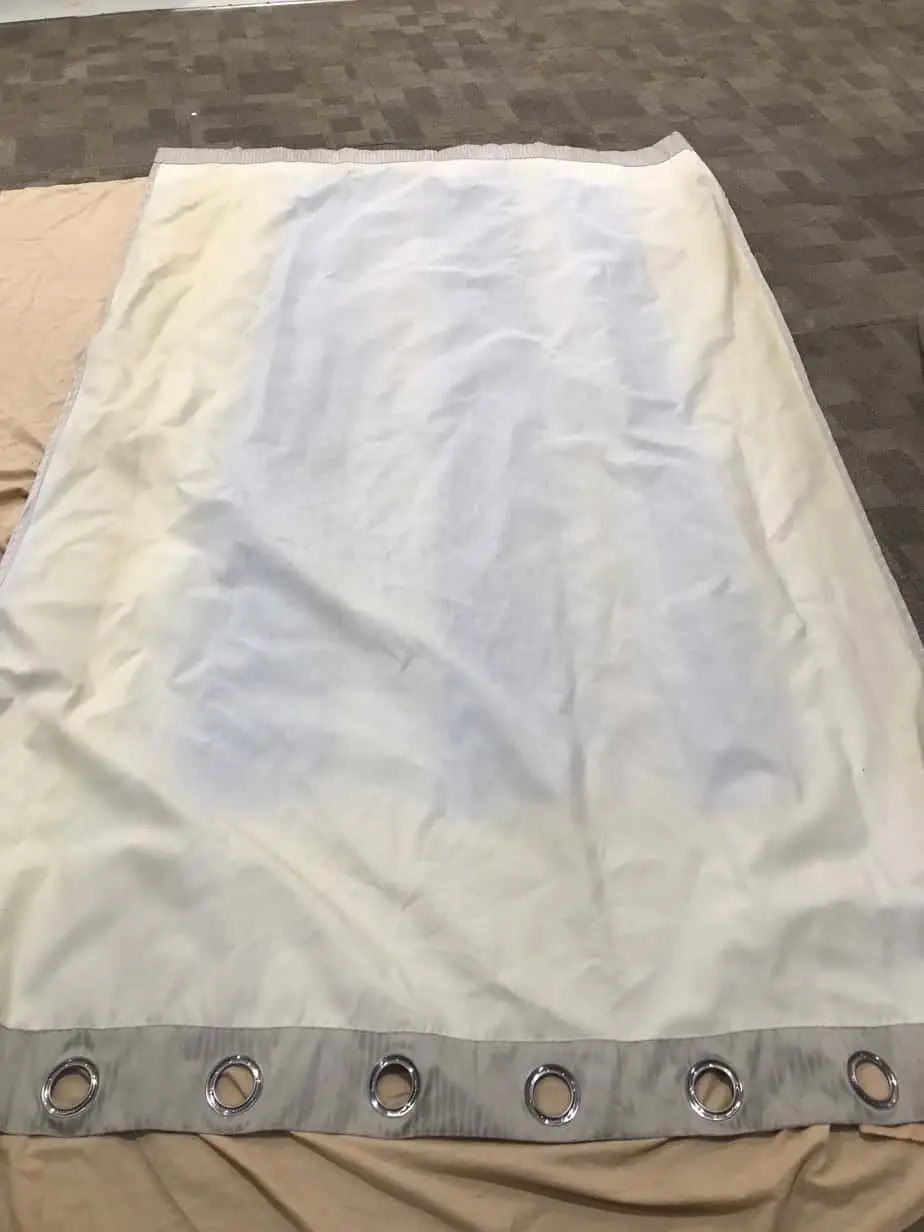
Supporting material-care detail for this article
Method at a glance

Test small, then reassess

01

Observe

Inspect glass, frames, walls, hems, lining and the back of the curtain.

02

Choose

Identify condensation, leaks and ventilation issues before broad cleaning.

03

Confirm

Test fabric stability and choose cleaning, repair or replacement by condition.

A practical stopping point

Stop when a test changes colour or texture, spreads the mark, leaves residue or reveals material damage rather than removable soil. More force is not a diagnosis; record the result and choose the correct next step.

article decision diagram for Curtain mould, condensation and recurring window marksObserveDecideAct

Tell us about your furniture

Required fields are marked with an asterisk. We use these details only to understand your quote request.

After submission, a confirmation or clear error message will appear below.

Route-specific answers

Questions about this topic

What should be checked before curtain mould, condensation and recurring window marks?

Inspect glass, frames, walls, hems, lining and the back of the curtain. Fabric, colour stability, construction and existing damage determine the safe scope.

How should I prepare for curtain mould, condensation and recurring window marks?

Identify condensation, leaks and ventilation issues before broad cleaning. Share labels, photographs, access information and previous products where known.

What result is realistic?

Test fabric stability and choose cleaning, repair or replacement by condition. Cleaning cannot reverse wear, sun fading, dye loss, tears or material breakdown.