Upholstery Cleaning Auckland · 09 884 0343
Upholstery Cleaning Auckland
Upholstery Cleaning Auckland · water-damage guide

Flood-soaked sofas: why cushions and foam decide the outcome

After a flood, the sofa cover is the least of the problem. Foam and padding hold water long after fabric feels dry, and the water source determines whether drying is even an option.

Safety-led educational guidance. Incident scope is confirmed only after assessment.

Water incident context for safety guidance
Quick answer

How water category, cushion foam and frame materials determine whether a flood-affected Auckland sofa can be saved.

After a flood, the sofa cover is the least of the problem. Foam and padding hold water long after fabric feels dry, and the water source determines whether drying is even an option.

  • Establish the water source first - clean supply water, outdoor floodwater and sewage-affected water lead to different decisions.
  • Check whether cushions unzip and remove - separable foam can be assessed and dried; sealed construction usually cannot.
  • Press deep into arms, backs and the deck after surface drying - dampness, weight or odour at depth means the water is still there.
01 · Practical guidance

Start with the actual material and condition

Establish the water source first - clean supply water, outdoor floodwater and sewage-affected water lead to different decisions. The visible symptom is only one part of the decision. Construction, age, previous products, access and the difference between surface soil and permanent material change should be recorded before treatment begins. Good-light photographs and care labels make the discussion more useful, but they do not replace an in-person test where stability is uncertain.

02 · Practical guidance

Choose the least risky useful next step

Check whether cushions unzip and remove - separable foam can be assessed and dried; sealed construction usually cannot. A controlled sequence is more useful than adding stronger chemistry or more moisture. Protect adjacent materials, work from a defined test area and compare the result after the material has settled or dried. If the test creates colour movement, texture change, rings or residue, stop rather than extending the same method across the item or room.

03 · Practical guidance

Separate cleaning limits from damage

Press deep into arms, backs and the deck after surface drying - dampness, weight or odour at depth means the water is still there. Cleaning may improve removable soil and odour sources, but it cannot reverse wear, fading, dye loss, delamination, tears, failed backing or unresolved building moisture. Naming that boundary early prevents repeated treatment from concealing the actual repair, replacement or restoration decision.

04 · Practical guidance

Prepare information for a practical quote

Record the Auckland suburb, approximate size or item count, material if known, access constraints and every product already used. Include photographs of the whole item or affected area as well as close details. For water-related concerns, also note when the incident was discovered, whether the source has stopped and any electrical, ceiling or contamination hazards from a safe position.

05 · Practical guidance

Foam is a sponge inside furniture that cannot be wrung out

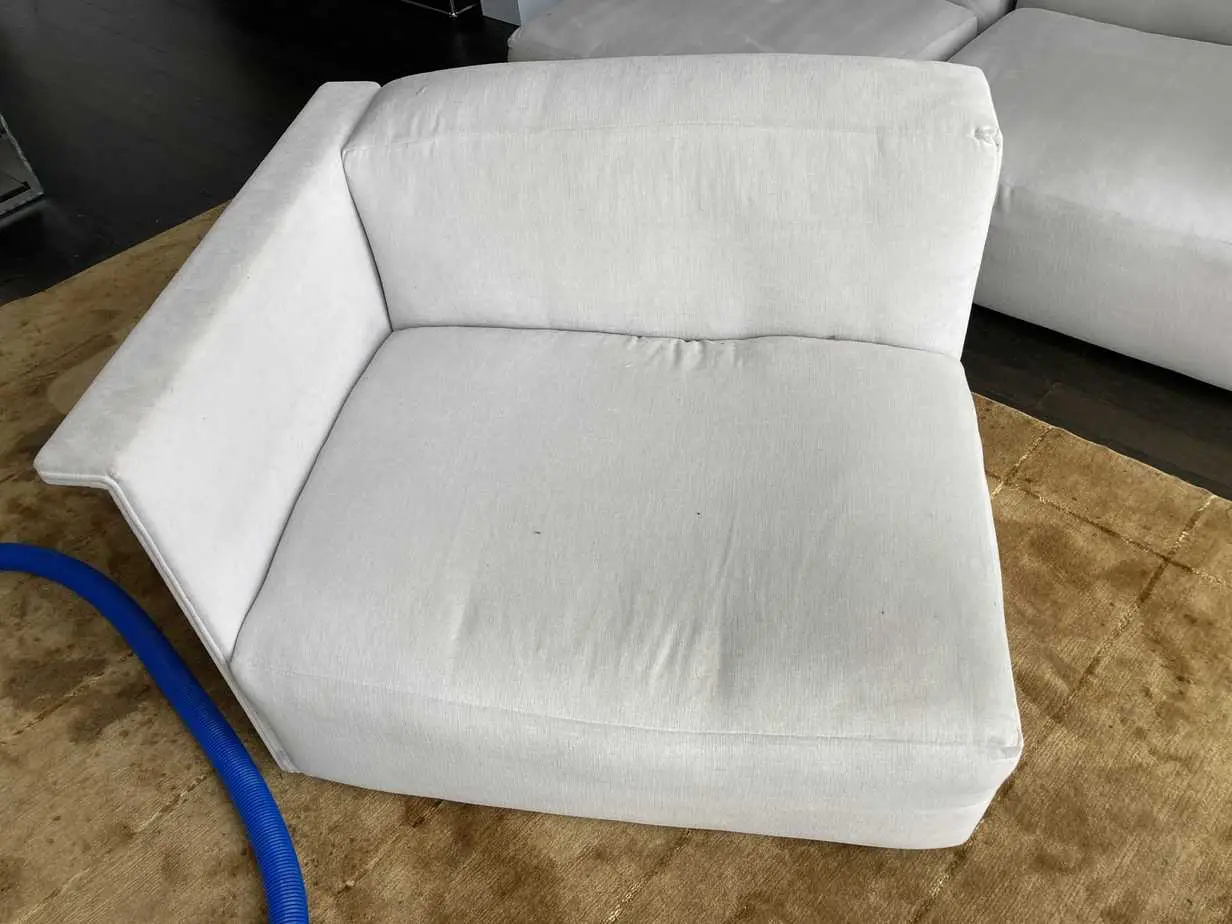
Upholstery foam absorbs many times its weight in water and releases it slowly through fabric layers that restrict airflow. A sofa that stood in floodwater for hours can hold litres of water in its base cushioning while the visible fabric dries in a day. Drying that is not verified at depth leaves moisture against timber framing and metal fixings, which is where odour, corrosion and microbial growth begin.

06 · Practical guidance

Outdoor floodwater changes the question from how to whether

Water that entered from outside carries soil bacteria and contaminants into absorbent filling where no surface cleaning can reach. For sealed-construction furniture soaked by contaminated water, replacement of affected cushioning or the piece itself is often the realistic answer. Clean-water incidents caught quickly are far more recoverable - which is why recording the source and timing matters more than starting to scrub.

Supporting material-care detail for this article
Method at a glance

Test small, then reassess

01

Observe

Establish the water source first - clean supply water, outdoor floodwater and sewage-affected water lead to different decisions.

02

Choose

Check whether cushions unzip and remove - separable foam can be assessed and dried; sealed construction usually cannot.

03

Confirm

Press deep into arms, backs and the deck after surface drying - dampness, weight or odour at depth means the water is still there.

A practical stopping point

Stop when a test changes colour or texture, spreads the mark, leaves residue or reveals material damage rather than removable soil. More force is not a diagnosis; record the result and choose the correct next step.

article decision diagram for Flood-soaked sofas: why cushions and foam decide the outcomeObserveDecideAct

Request flood restoration help

Tell us about the water incident and the support you need. We will use these details to assess the request and contact you about the next step.

After submission, a confirmation or clear error message will appear below.

Route-specific answers

Questions about this topic

What should be checked before flood-soaked sofas: why cushions and foam decide the outcome?

Establish the water source first - clean supply water, outdoor floodwater and sewage-affected water lead to different decisions. Fabric, colour stability, construction and existing damage determine the safe scope.

How should I prepare for flood-soaked sofas: why cushions and foam decide the outcome?

Check whether cushions unzip and remove - separable foam can be assessed and dried; sealed construction usually cannot. Share labels, photographs, access information and previous products where known.

What result is realistic?

Press deep into arms, backs and the deck after surface drying - dampness, weight or odour at depth means the water is still there. Cleaning cannot reverse wear, sun fading, dye loss, tears or material breakdown.