01 · Practical guidance
Start with the actual material and condition
Map the incident source and every adjoining material from a safe position. The visible symptom is only one part of the decision. Construction, age, previous products, access and the difference between surface soil and permanent material change should be recorded before treatment begins. Good-light photographs and care labels make the discussion more useful, but they do not replace an in-person test where stability is uncertain.
02 · Practical guidance
Choose the least risky useful next step
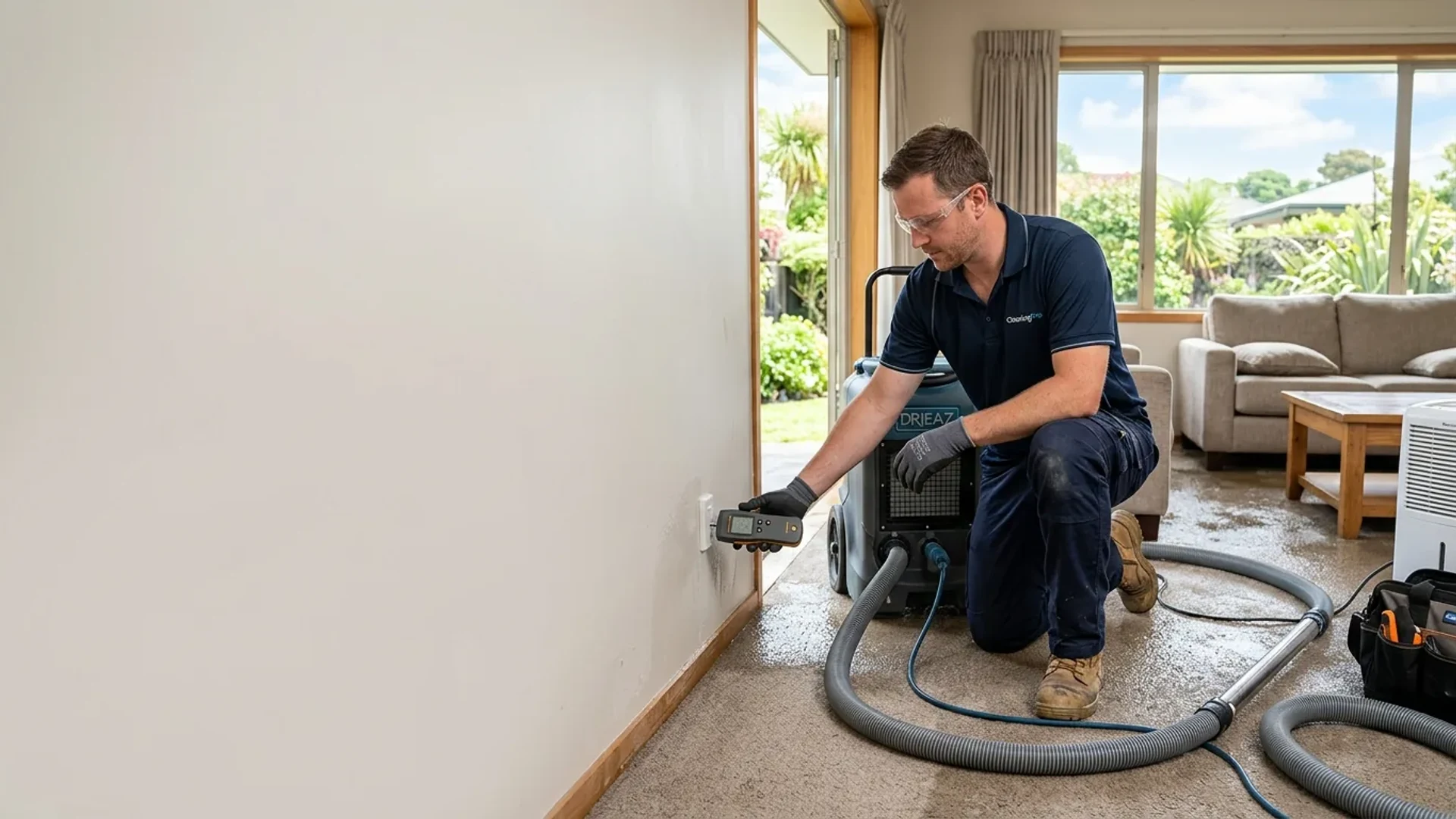
Use appropriate assessment to define suspected hidden moisture boundaries. A controlled sequence is more useful than adding stronger chemistry or more moisture. Protect adjacent materials, work from a defined test area and compare the result after the material has settled or dried. If the test creates colour movement, texture change, rings or residue, stop rather than extending the same method across the item or room.
03 · Practical guidance
Separate cleaning limits from damage
Verify the agreed drying endpoint before closing, coating or redecorating. Cleaning may improve removable soil and odour sources, but it cannot reverse wear, fading, dye loss, delamination, tears, failed backing or unresolved building moisture. Naming that boundary early prevents repeated treatment from concealing the actual repair, replacement or restoration decision.
04 · Practical guidance
Prepare information for a practical quote
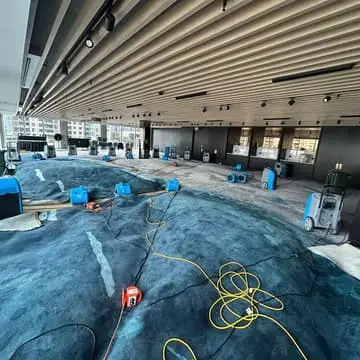
Record the Auckland suburb, approximate size or item count, material if known, access constraints and every product already used. Include photographs of the whole item or affected area as well as close details. For water-related concerns, also note when the incident was discovered, whether the source has stopped and any electrical, ceiling or contamination hazards from a safe position.
05 · Practical guidance
Different materials release moisture at different rates
Dense timber, plasterboard, insulation, adhesive and concrete do not behave like an exposed textile surface. Environmental conditions can also change readings through the day. A useful drying record considers material and location rather than one room-air number.
06 · Practical guidance
Premature cosmetic work can hide an unresolved condition
Painting, reinstalling flooring or closing a cavity before readiness is confirmed can trap moisture and complicate later diagnosis. Keep source-repair and drying records together, and distinguish a visual improvement from a measured handover decision.